We are asked what a wedding costs before we are asked anything else, and the honest answer is that the number depends almost entirely on two things: how many people you invite, and how many separate functions you hold. Everything else is a rounding error by comparison.
Rather than quote a figure that will be wrong for your wedding, here is how the money distributes — which is far more useful, because the proportions hold whether you are spending eight lakh or eighty.
Roughly where every rupee goes
- Catering: 35 to 45 per cent. The largest line by a wide margin, and the one that scales directly with guest count.
- Venue and accommodation: 15 to 20 per cent, higher if you are blocking hotel rooms for outstation guests.
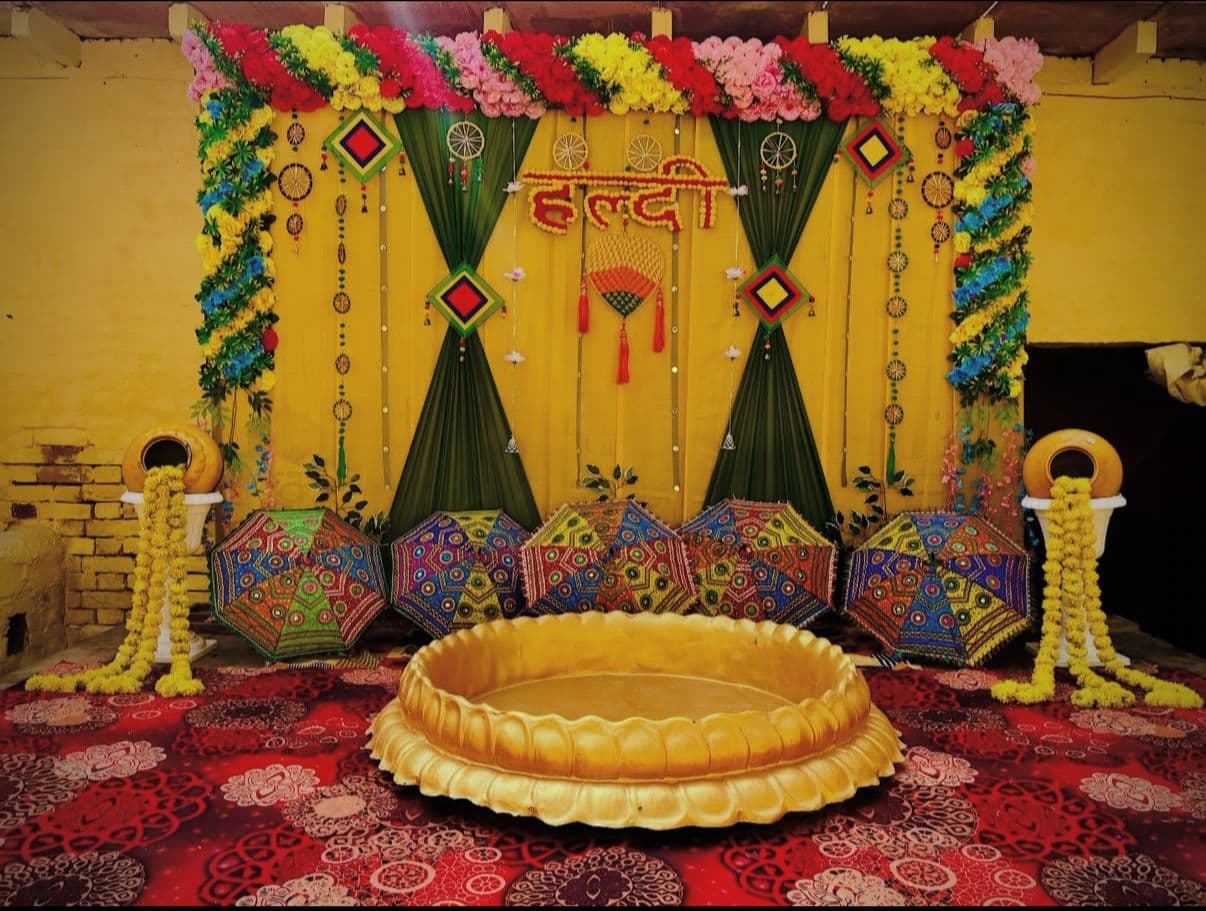
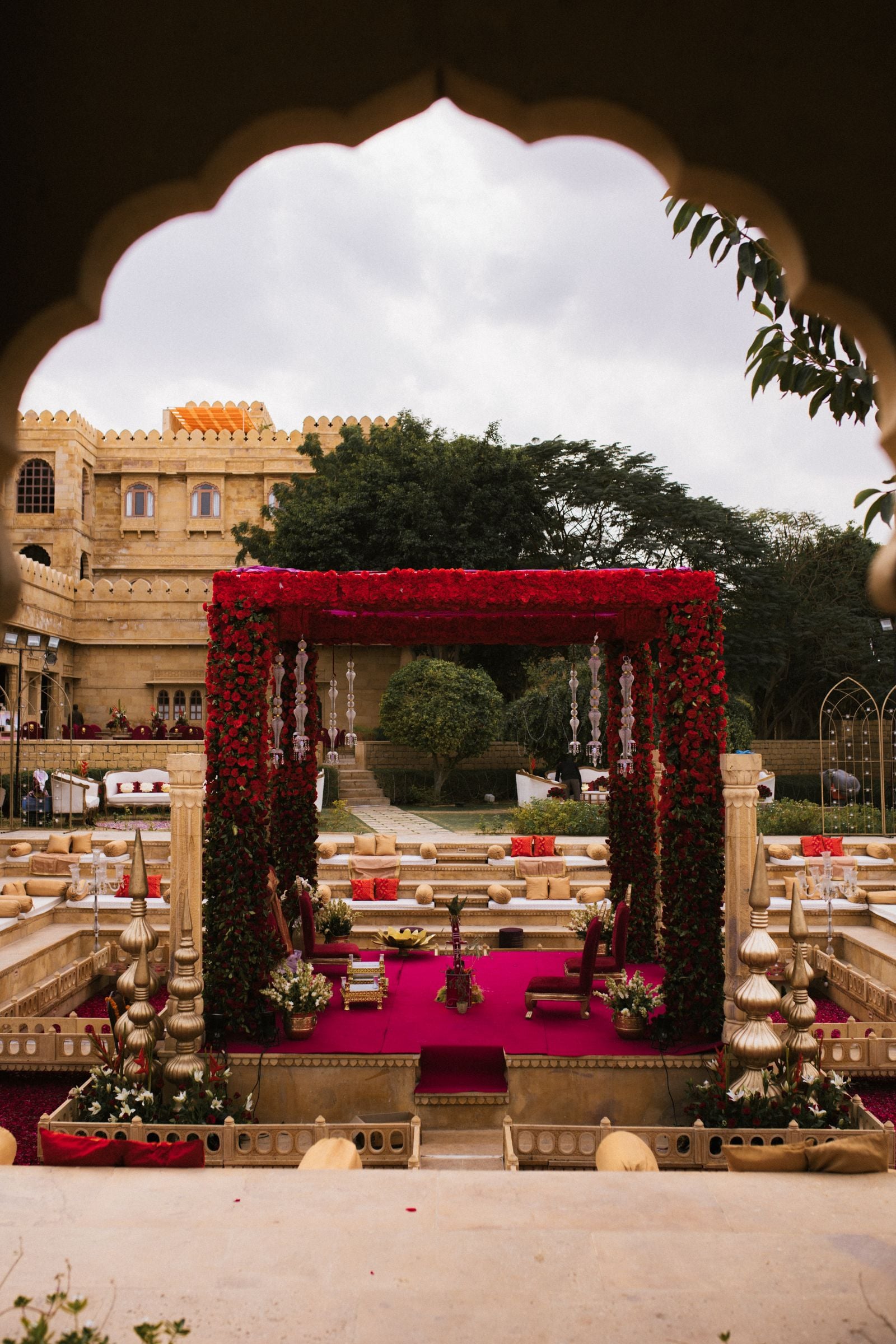
- Decor, mandap and floral: 12 to 18 per cent, and the line with the widest quality range at any given price.
- Photography and video: 8 to 12 per cent. The only thing on this list you still have in twenty years.
- Music, DJ and entertainment: 5 to 8 per cent, including the baraat setup.
- Outfits and jewellery: highly variable, and usually tracked outside the event budget entirely.
- Transport, vintage car and logistics: 3 to 5 per cent.
- Contingency: 10 per cent. Not optional. It will be spent.
Cutting the guest list by fifty people saves more money than cutting every other line item you are willing to compromise on.
The costs families consistently forget
Budgets rarely break on the big items — those get negotiated carefully. They break on the accumulation of things nobody costed at all.
- Vendor meals. Forty to sixty people work a mid-sized wedding, and they all eat.
- Generator backup and power distribution for an outdoor function.
- Overtime. Functions run late; most contracts bill by the hour past a cut-off.
- Setup and teardown charges, which are sometimes quoted separately from the decor itself.
- Guest transport between hotel and venue for outstation families.
- GST, which is frequently quoted as extra and is very easy to mentally skip.
Where cutting is invisible, and where it shows
Some savings genuinely cost you nothing that a guest will perceive. Others are noticed by everyone, immediately, and remembered.
Cut invisibly: reduce the number of live counters rather than the quantity of food, use seasonal flowers instead of imported stems, hold the mehndi and haldi at home instead of a venue, choose an off-peak date, and trim the length of the reception rather than its quality.
Do not cut: the photographer, the sound system, the food quantity, or the lighting. Bad light ruins every photograph taken all evening. A weak sound system makes the sangeet fall flat no matter how well it is choreographed. These are the four places where saving twenty thousand rupees costs you the event.
Getting quotes you can actually compare
Two decor quotes for the same wedding can differ by a factor of three and both be fair, because they are describing different work. Before comparing, insist that every quote states the same things.
- Exactly what is included, itemised — not 'stage decor' as a single line.
- Whether setup, teardown and transport are inside the number or outside it.
- Whether GST is included, and at what rate.
- The overtime rate, per hour, past the stated cut-off.
- The payment schedule and the cancellation terms, in writing.
A vendor who resists itemising is telling you something useful. We quote itemised by default, and we would rather lose a booking on price than win it on an ambiguity that turns into an argument three days before the wedding.