Almost every couple who calls us has already picked a colour palette and a Pinterest board. Very few have locked a venue or a date with the caterer. That order is backwards, and it is the single most common reason a wedding budget runs over: the things with the least availability get booked last, at whatever price is left.
What follows is the working checklist we use internally, adapted for couples planning their own wedding in and around Lalru, Chandigarh and Mohali. It assumes roughly ten months of runway. If you have less, the order still holds — you just compress it.
10 to 8 months out: the things that sell out
Three decisions constrain everything else, so they come first. Until they are settled, nothing else can be confirmed.
- Fix the date, and fix a backup date. Peak season here runs November through February plus the spring muhurats, and the good venues are gone twelve months ahead.
- Book the venue. Get the rain plan in writing — an open lawn without a covered alternative is a risk you carry alone.
- Set a real budget with a named ceiling, and decide who is paying for what before either family starts committing money.
- Lock the guest count range. Not a number — a range. Catering, seating, parking and decor all scale off it.
A word on the guest count: families routinely underestimate it by thirty per cent. Plan catering for the top of your range, not the middle. Running short of food at an Indian wedding is the one mistake nobody forgets.
8 to 6 months out: the core vendors
- Photographer and videographer. The genuinely good ones in this region book a year out for peak dates.
- Caterer, with a tasting scheduled — never sign off a menu you have not eaten.
- Decor and mandap. Bring photographs of the actual venue, not reference images from somewhere else.
- DJ, orchestra or live band, including the baraat setup if you want a DJ on wheels.
- Vintage car or entry vehicle, if the groom's entry matters to you.
Book the vendors whose calendar is the constraint, in the order that calendar fills. Everything else can be arranged in a fortnight.
6 to 4 months out: outfits and invitations
Bridal lehengas take three to four months once measurements are taken, and that is before alterations. Start earlier than feels necessary. The same applies to the groom's sherwani and to coordinated family outfits, which always take one round more than planned.
- Order bridal and groom outfits; schedule the first fitting for six weeks before the date.
- Finalise the invitation design and print. Digital invites go out first; printed cards follow for close family.
- Book accommodation blocks for out-of-town guests — Zirakpur and Chandigarh hotels fill during wedding season.
- Confirm the pandit and the exact muhurat timings. Every ceremony's schedule keys off this.
3 to 2 months out: the ceremonies around the wedding
By now the wedding day itself is largely handled. The events around it — roka, sagan, mehndi, haldi, sangeet, reception — are what people start to neglect, and they are where the photographs everyone shares actually come from.
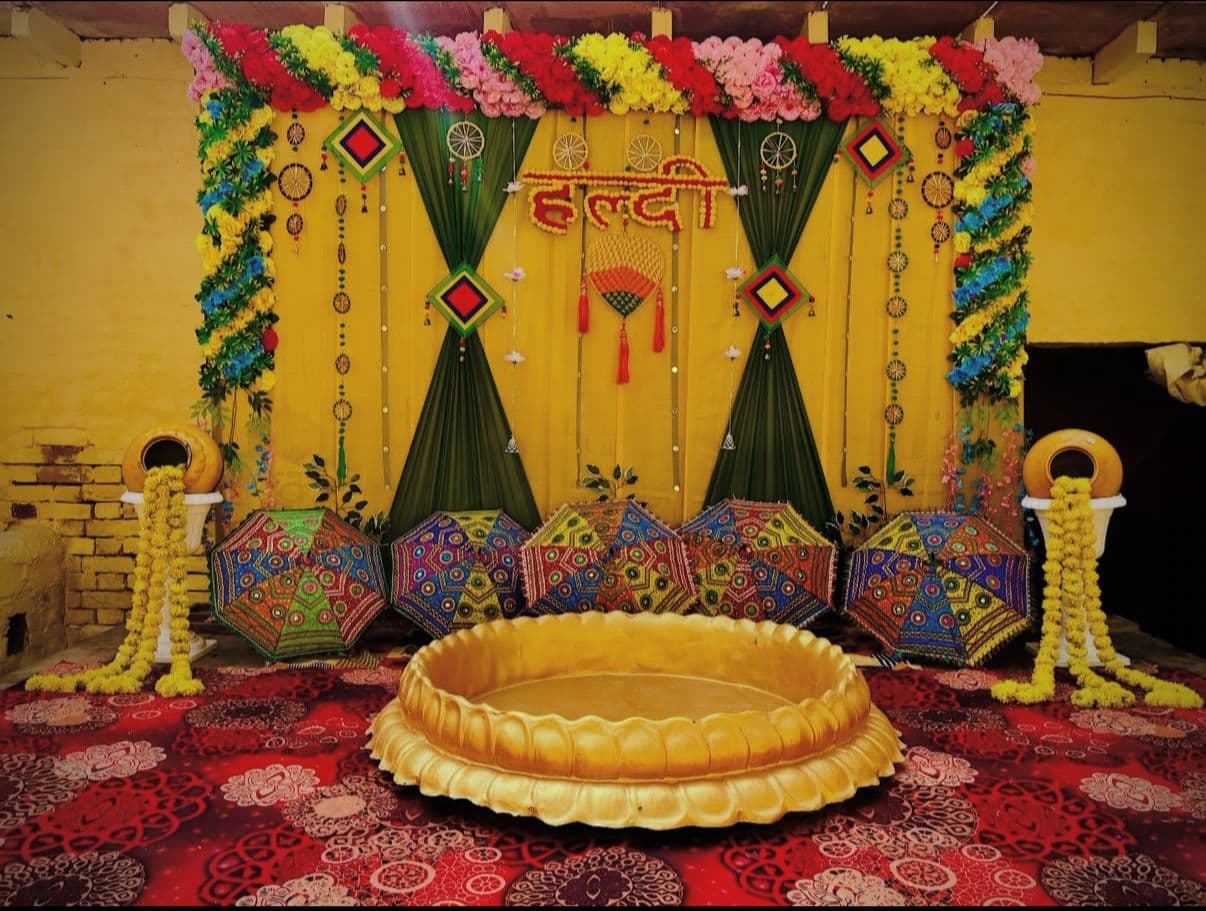
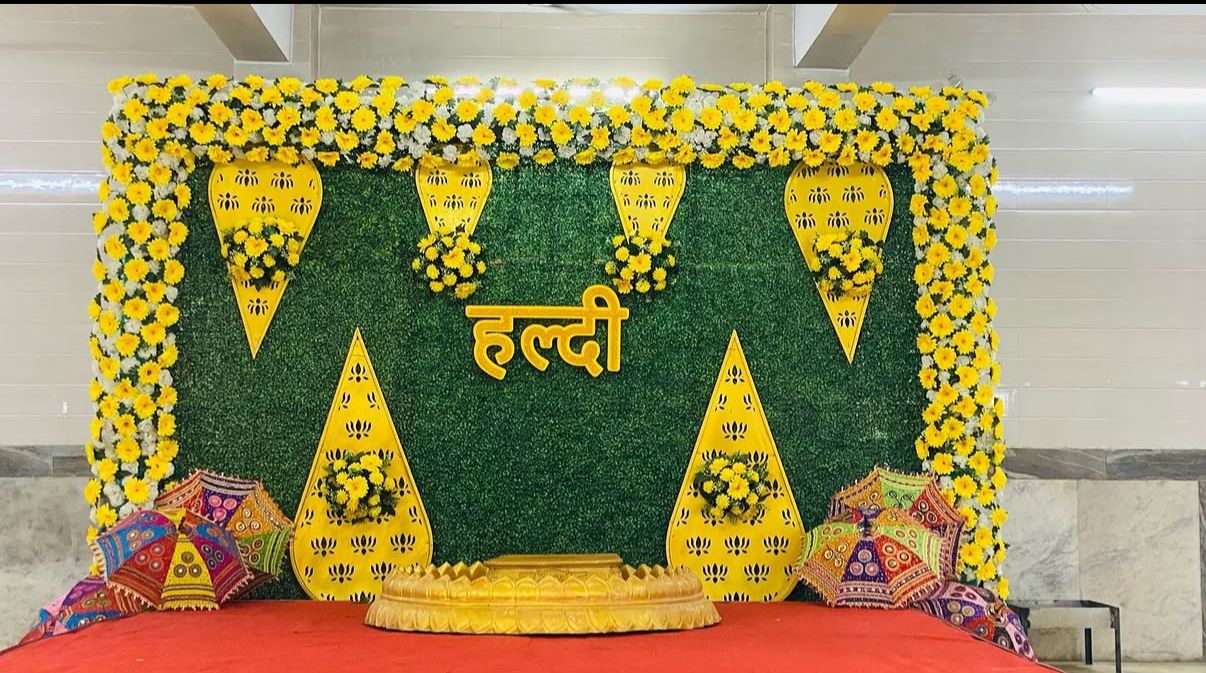
- Lock decor for each function separately. A haldi setup and a sangeet stage have nothing in common.
- Plan the sangeet running order and start rehearsals. Performances always take longer than the family expects.
- Send the photographer a shot list, especially for family groupings — nobody can reconstruct these later.
- Confirm transport and parking. At a venue on a main road, parking marshals are not optional.
1 month out: confirm everything in writing
This is the month for paperwork, not creativity. Every vendor gets a written confirmation with arrival time, setup window, contact number and the final balance. Verbal agreements made eight months ago have a way of being remembered differently.
- Final headcount to the caterer, with the vendor-meal count included.
- A single timeline document shared with every vendor and both families.
- One named coordinator per function, so nobody is calling the bride at 9 a.m. about chair covers.
- Payment schedule mapped out — what is due before, what is due on the day, and who is carrying it.
The week of, and the day itself
Keep the last three days deliberately empty. Something will need them. Deliveries slip, an outfit needs a final alteration, a relative arrives early. If your schedule is already full, that small problem becomes a crisis.
On the day, the couple should be holding a phone for photographs and nothing else. Every logistical question goes to the coordinator. That single rule is most of what a planner is actually for.
If you would rather not run this yourself
This checklist is genuinely workable for a family with the time to run it. If you do not have that time — and most working couples do not — that is the job we do. We have run this timeline more than five hundred times across Lalru, Chandigarh, Mohali and Panchkula, and we know which deadlines are soft and which ones are not.