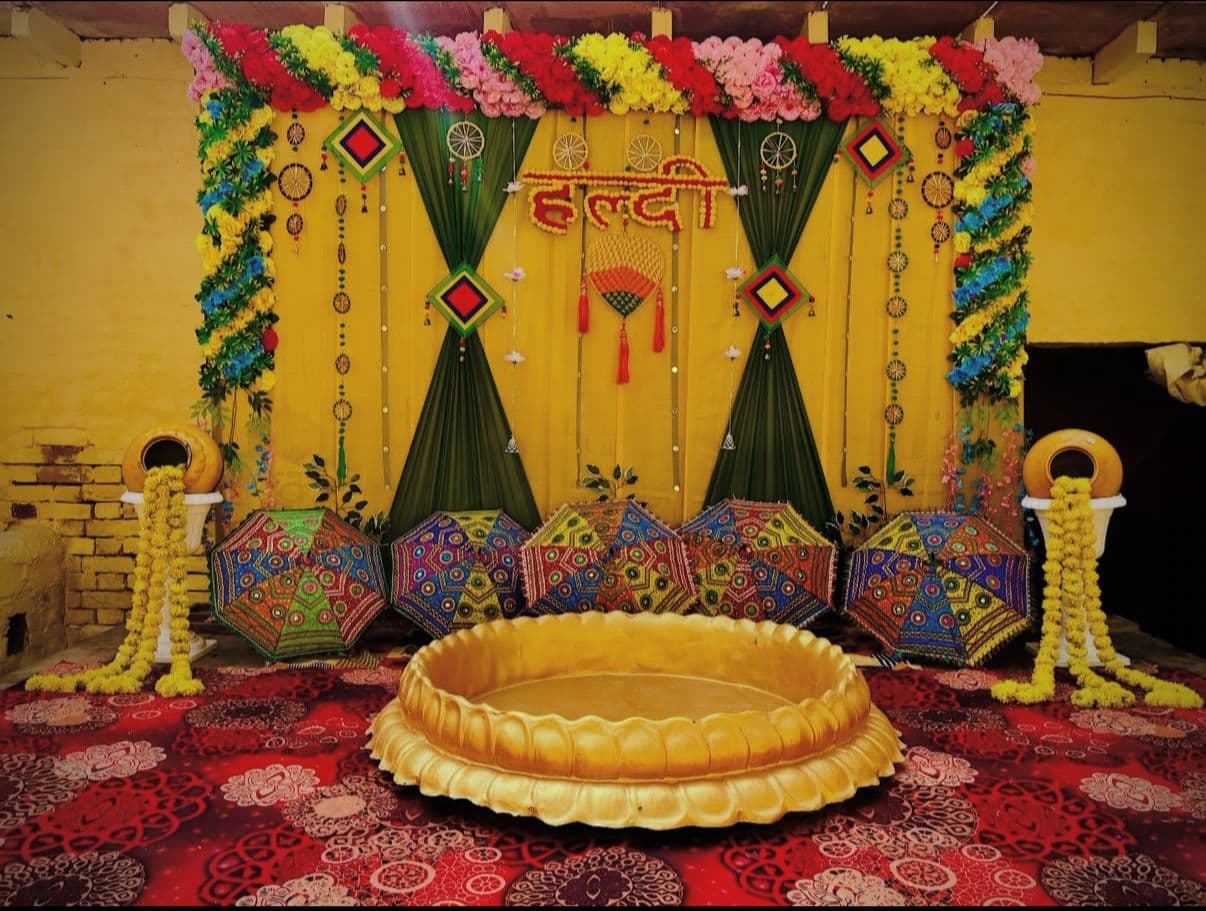
The haldi is the most photographed function of the wedding relative to how much is spent on it. It runs in daylight, guests are relaxed, and everybody has a phone out. Which means haldi decor has a constraint no other function has: it has to hold up in unforgiving midday light, from angles you did not plan for.
These are the things we have learned setting up haldi functions across Lalru, Mohali and Panchkula — mostly by watching which setups photographed well and which ones quietly did not.
Put the backdrop where the light is behind the camera
This matters more than the backdrop itself. A stunning floral wall facing into the sun means every guest photograph has the subjects squinting with blown-out highlights behind them. Walk the venue at the hour the function will actually run — not the evening before — and place the backdrop so the sun falls on the faces, not behind them.
If the only workable position puts the sun behind the couple, you need diffusion overhead or a reflector on the guest side. A shamiana or a light canopy solves it and adds to the setup rather than fighting it.
Colour behaves differently under hard sun
- Marigold is the safest choice there is. It holds saturation in direct light and it photographs as the colour your eye sees.
- Deep greens — a grass wall, palm fronds, banana leaf — give the yellows something to sit against. Yellow on yellow flattens completely on camera.
- Pastels wash out badly outdoors. Save them for an indoor or evening function.
- White gets clipped to a featureless blank in bright sun. Use it as a small accent, never as the main field.
Marigold against green is the most reliable haldi palette we know. It has been used for generations because it works, not because nothing better exists.
Build upward, not just across
A flat backdrop wall reads as a flat backdrop wall. Hanging elements — marigold garland curtains, decorative umbrellas, suspended floral rings — add depth that separates the subject from the background, which is exactly what makes a photograph look composed rather than snapped.
Umbrellas in particular do three jobs at once: they add colour overhead, they throw useful shade, and they give the photographer a frame for wide shots. For an outdoor daytime function they are hard to beat.
Plan for haldi actually being thrown
Turmeric stains permanently. Anyone who has run a haldi knows this, and yet we still see white seating and pale fabric drapes set up within range of the couple.
- Lay a floor covering and accept that it is disposable.
- Keep pale fabric out of the splash zone entirely, or use it only at height.
- Seat the couple on something that can be cleaned, or covered with something that can be thrown away.
- Set up a water point and towels just off-frame. Someone will need it within ten minutes.
Leave room for the group photograph
The single most requested haldi shot is the whole family together in front of the backdrop. It is also the one setups routinely make impossible, by building a backdrop three metres wide with seating pressed up against it.
Give the main backdrop at least four to five metres of usable width and keep three metres clear in front of it. A smaller backdrop with room to shoot beats a larger one nobody can photograph a group against.
Fresh flowers have a clock on them
In Punjab summer heat, fresh floral installations look their best for around four hours after setup. Schedule installation for early morning on the day, not the previous night, and keep the arrangements shaded until the function begins. If the haldi runs long or the weather is extreme, a mixed setup — fresh flowers at eye level, fabric and foliage everywhere else — holds up far better and costs less.